
There’s a ton of data out there that shows, when implemented correctly, employee referral programs can have a massive impact.
45% of salespeople that are referred from internal employees, for example, stay for over four years. By comparison, only 25% sourced from job boards hang around for 2+ years. Employee referrals also save companies over $7,500 per hire. And a whopping 82% of employers rate “employee referrals above all other sources for generating the best ROI.”
The numbers speak for themselves.
If you’re wondering how exactly you go about launching an employee referral program, I’m going to break it down step-by-step in this post. Here’s a full overview of the nuts and bolts of the process.
Step 1: Identify Which Positions You Want to Hire For
First, determine which specific positions you want to accept referrals for. You may, for example, strictly be looking to bring on sales reps but aren’t interested in sales managers because you need someone with a highly specific skill set for the latter and want to handle the recruiting yourself.
I suggest going through every single one of your company’s positions and making note of the ones you’re open to filling through an employee referral program.
Step 2: Pinpoint the Types of Candidates You’re Looking For
Just like with any other method of hiring, it’s essential to know precisely what makes for a great candidate. After all, it doesn’t do you any good if your existing employees are leveraging their networks only to bring in ill-suited candidates.
Here’s what I suggest doing to ensure employees send rockstar talent your way:
- Create candidate personas, including hard skills, soft skills, experience, education, and so on
- Identify what you’re looking for in terms of a cultural fit
- Determine what core values a candidate should possess
Once you have that fleshed out, create a resource to serve as a point of reference when internal employees are considering who to reach out to.
Step 3: Decide if You Want to Offer Rewards for Referrals
A study by LinkedIn found that most employees don’t have monetary gain in mind when providing referrals.
- 35% do it to help their friends
- 32% do it to help their company
- 26% do it to be seen as a valuable colleague
Only a tiny 6% do it for money. That said, having some type of reward or perk in place is definitely something to consider, as it can give your employees further incentive to find the right candidates.
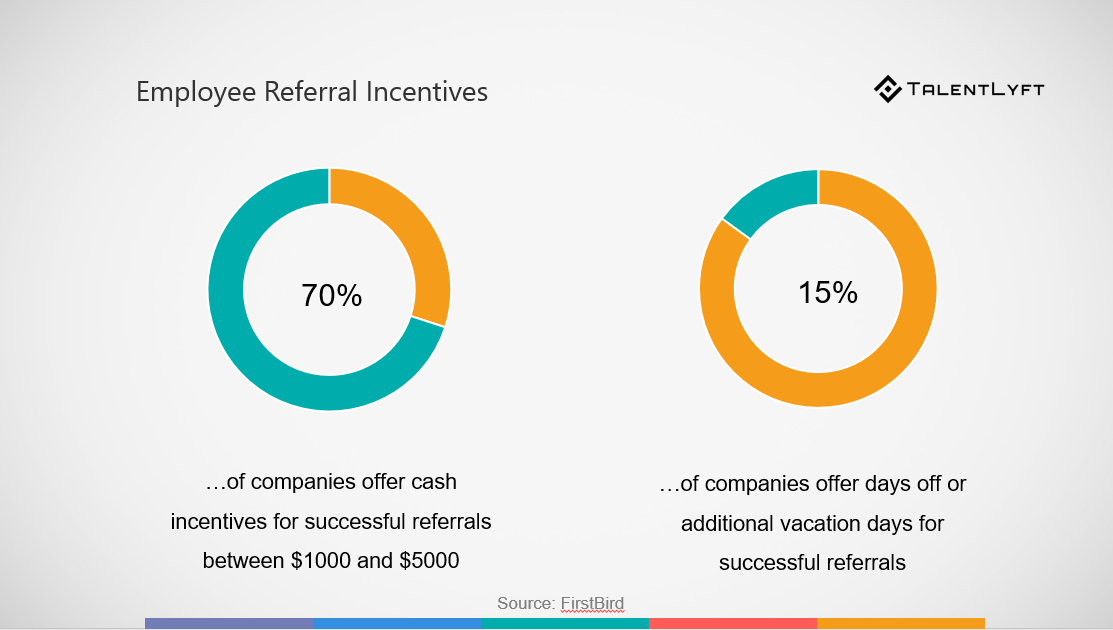
Research from TalentLyft found the vast majority of companies offer cash incentives, typically between $1,000 - $5,000, and 15% offer days off or vacation days.
A few other ideas they suggest include:
- Tickets for local events
- Tickets for a trip
- Food and drink
Step 4: Choose an Employee Referral Software
You certainly don’t need a lot of bells and whistles to launch a successful employee referral program. In fact, I suggest keeping it as simple as possible.
But there are some amazing software platforms available that can streamline the process dramatically, while simplifying things for HR, your employees that provide referrals, and for the referrals themselves.
Here are some specific features that can be a huge help:
- Automatic job alerts
- Links employees can conveniently share with potential candidates through email, text, and social media with information on the sales position
- Fully customized applications for candidates to fill out, complete with unique branding elements
- Built-in referral tracking to ensure the right employee gets credit
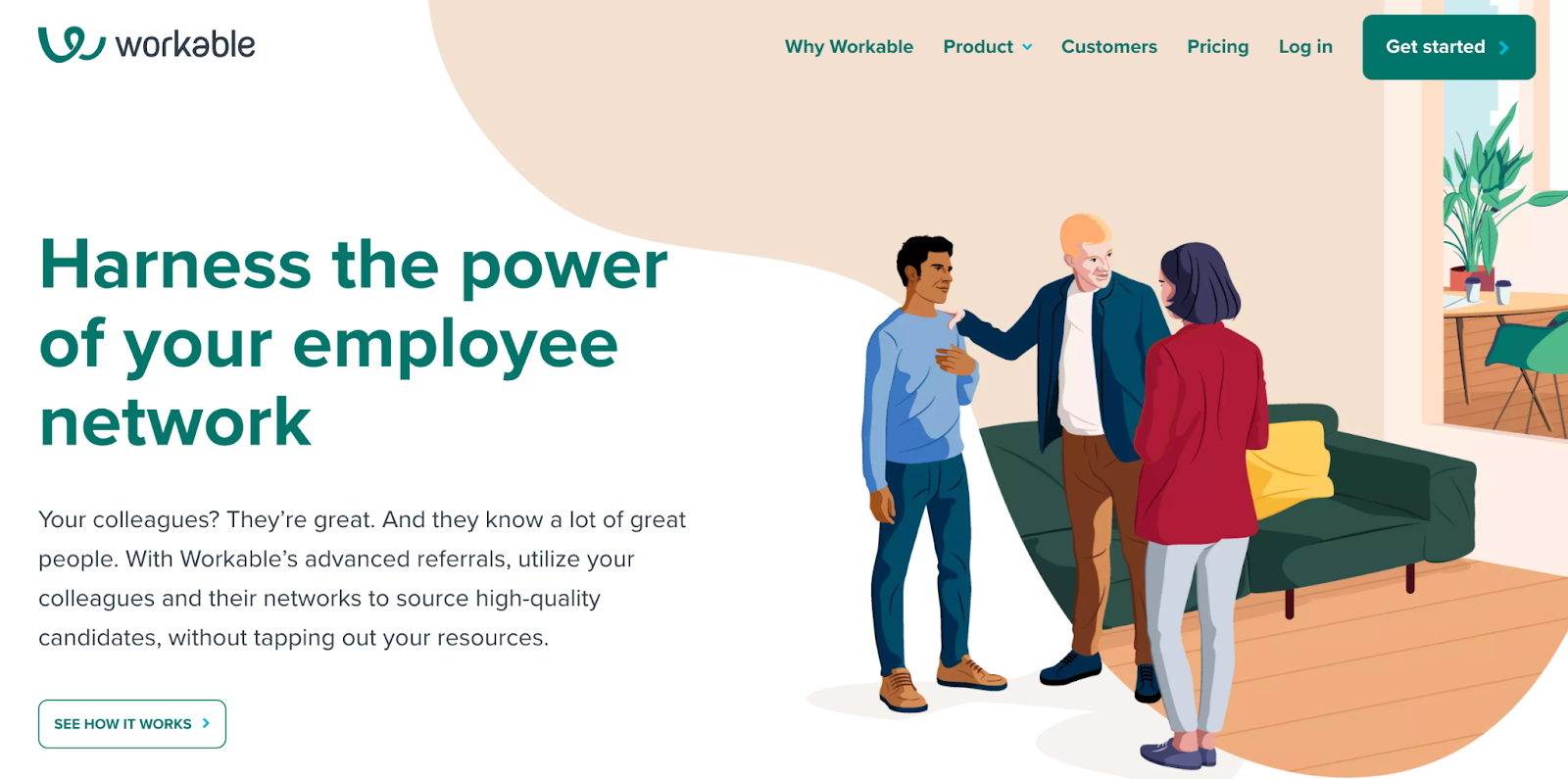
In terms of specific platforms, Workable is easy to use and one I personally recommend.
Or, if you want an exhaustive list of the top employee referral software, this guide from G2 is super helpful.
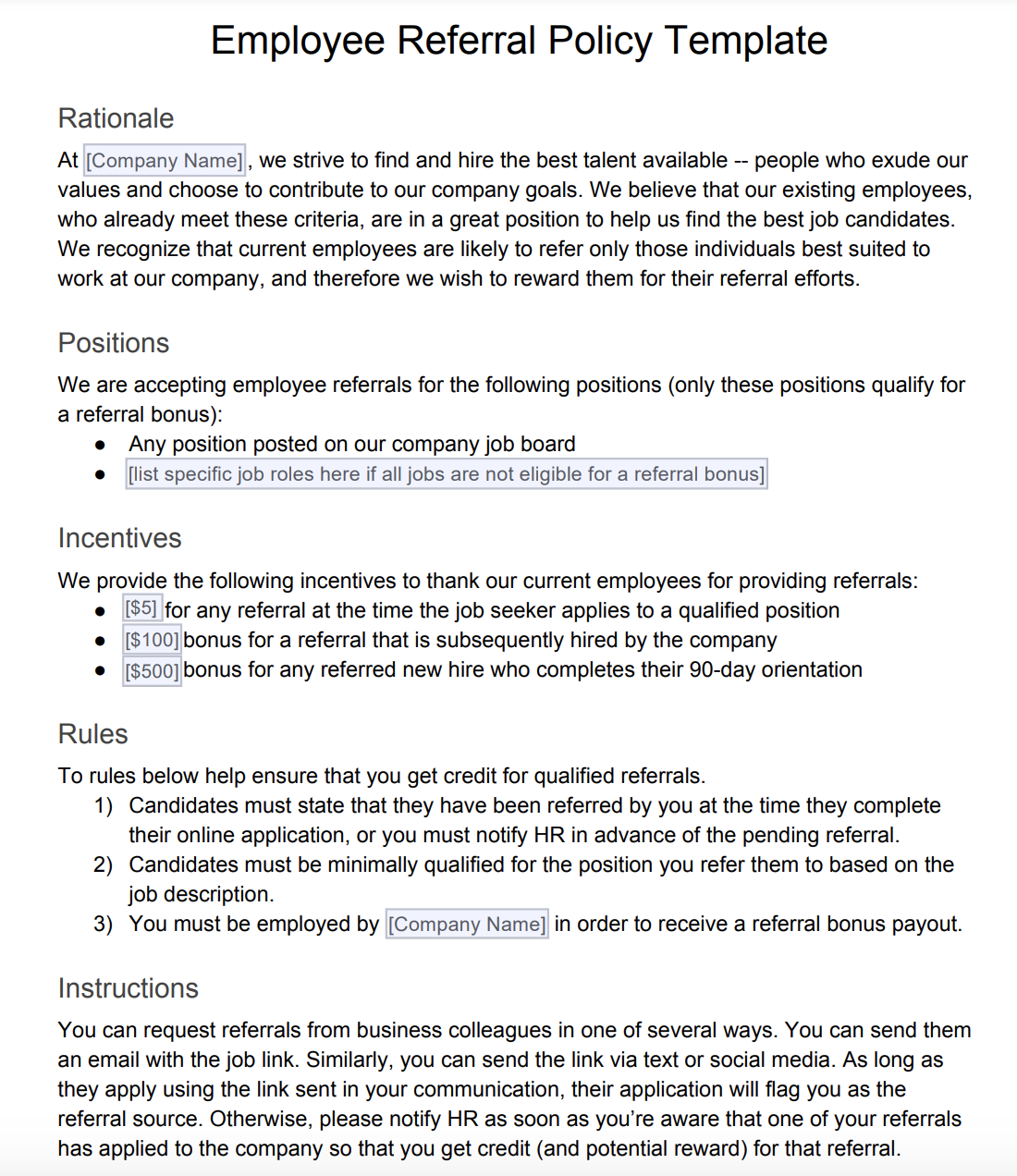
Step 5: Create an Employee Referral Policy
Once you’ve figured out what positions you’re willing to accept referrals for, what you’re looking for in candidates, determined whether or not you want to offer rewards, and chosen a software platform, it’s time to create a formal employee referral policy.
The purpose of this is to let your employees know the following:
- Which positions are available
- What skills, traits, etc., you’re looking for in an ideal candidate
- What the incentives are
- How to submit referrals
- Specific instructions to follow
Here’s a sample template from Fit Small Business to point you in the right direction.
Step 6: Write Job Descriptions
It’s also important that you have job descriptions ready to roll whenever candidates are generated through referrals. This should be approached just as it would with any other form of recruiting. The purpose here is to concisely articulate:
- The core tasks an employee will be responsible for
- Necessary skills and experience
- Expectations
I suggest reading this guide from Zendesk for detailed instructions on how to write A+ job descriptions.
Step 7: Get the Word Out
Finally, you need to promote your employee referral program and get everyone up to speed. I find the best way to go about this involves a two-step approach:
- $1
- $1
It’s also smart to provide your employees with quick links that enable them to share through email, social media, and text like I mentioned earlier. That way they can conveniently network and generate a steady stream of referrals without having to do any heavy lifting.
Making Referrals an Integral Part of Your Recruiting
If you’re looking to save money on recruiting, increase your retention rate, and create a tighter, more connected sales team, launching an employee referral program is definitely something to consider. The vast majority of companies that implement one see a fantastic ROI, and it can really help you strengthen your culture over time.
Following the seven steps outlined here should provide you with the basic framework for turning an employee referral program from an idea in your head into a reality.
Tired of hiring the wrong sales reps? See how HireDNA can help you eliminate 96% of hiring mistakes using industry-leading assessment science.