
Most B2B sales organizations invest heavily in getting the hire right. Job descriptions get refined. Interview panels get assembled. Assessments get added. Offer letters get negotiated. Leadership alignment takes multiple meetings.
Then the offer is signed, and onboarding becomes an afterthought.
That is where many companies unintentionally create the very outcome they spent months trying to avoid. Because even the right sales hire can struggle without the right foundation in place.
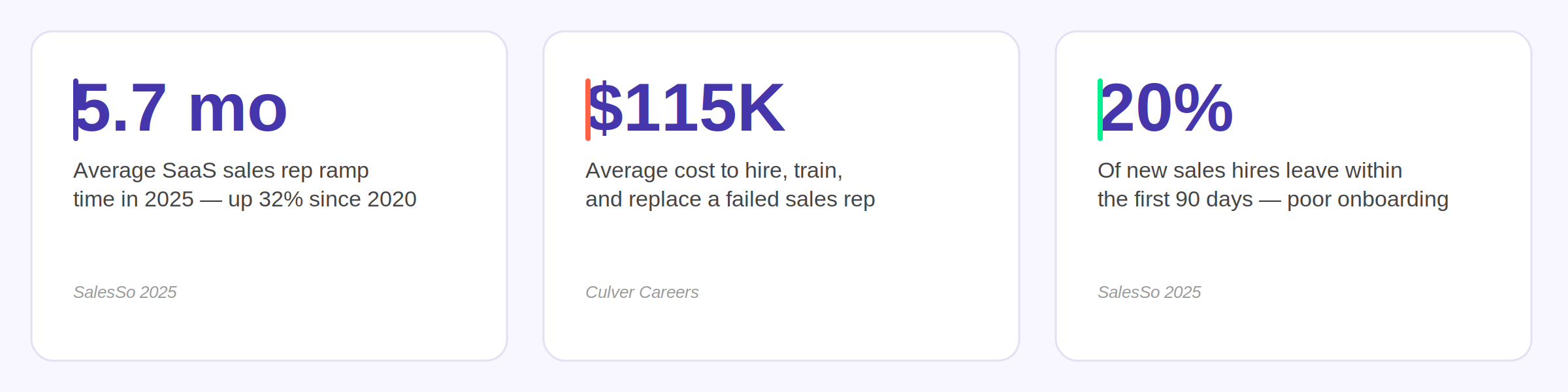
What gets missed after the offer letter
There is a common assumption in sales hiring that experienced reps should be able to figure it out. They have done this before. They know how to sell.
That assumption is expensive.
Strong salespeople generally ramp faster. They ask sharper questions. They learn quickly. But they still need structure to reach full productivity, especially in a new environment with new products, new buyers, and a new team.
Without a clear sales onboarding foundation, even talented reps may underperform or take significantly longer to contribute. This becomes especially critical in:
Complex B2B sales environments
Technical SaaS products with longer learning curves
Long sales cycles where early pipeline activity is invisible for months
New verticals or market segments
Net new business development roles
Growing organizations building out sales infrastructure for the first time

One of the most costly onboarding mistakes: measuring revenue too early
The most common mistake in growing sales organizations is evaluating new hires too early, based almost entirely on closed revenue.
Revenue is the goal. But there is usually a process required to get there. Ramp time matters. Sales cycle length matters. Pipeline development matters.
A rep selling into larger organizations or more complex buying environments may have months of legitimate activity happening before a single deal closes. That is not failure. It is how enterprise sales works.
The problem is when leadership does not account for this during ramp, and both sides end up frustrated 60 to 90 days in. Strong onboarding programs define and measure the activities that lead to revenue, not just the final outcome.
Expectations have to be defined, not assumed
Many companies tell new reps to go build pipeline. Few tell them exactly what that should look like in month one, two, or three.
These expectations cannot live in a manager's head. They need to be defined before the rep's first day, documented in a written ramp plan, tracked consistently, and reviewed in regular pipeline conversations.
When sales onboarding expectations are ambiguous, both sides fill in the blanks differently. That misalignment typically surfaces between 60 and 90 days in, and by then, a significant amount of time has already been lost.
Many failed sales hires are actually onboarding failures
Not every underperforming sales hire is a recruiting problem. In many cases, the company failed to create the conditions necessary for success.
Common onboarding gaps that derail otherwise strong hires:
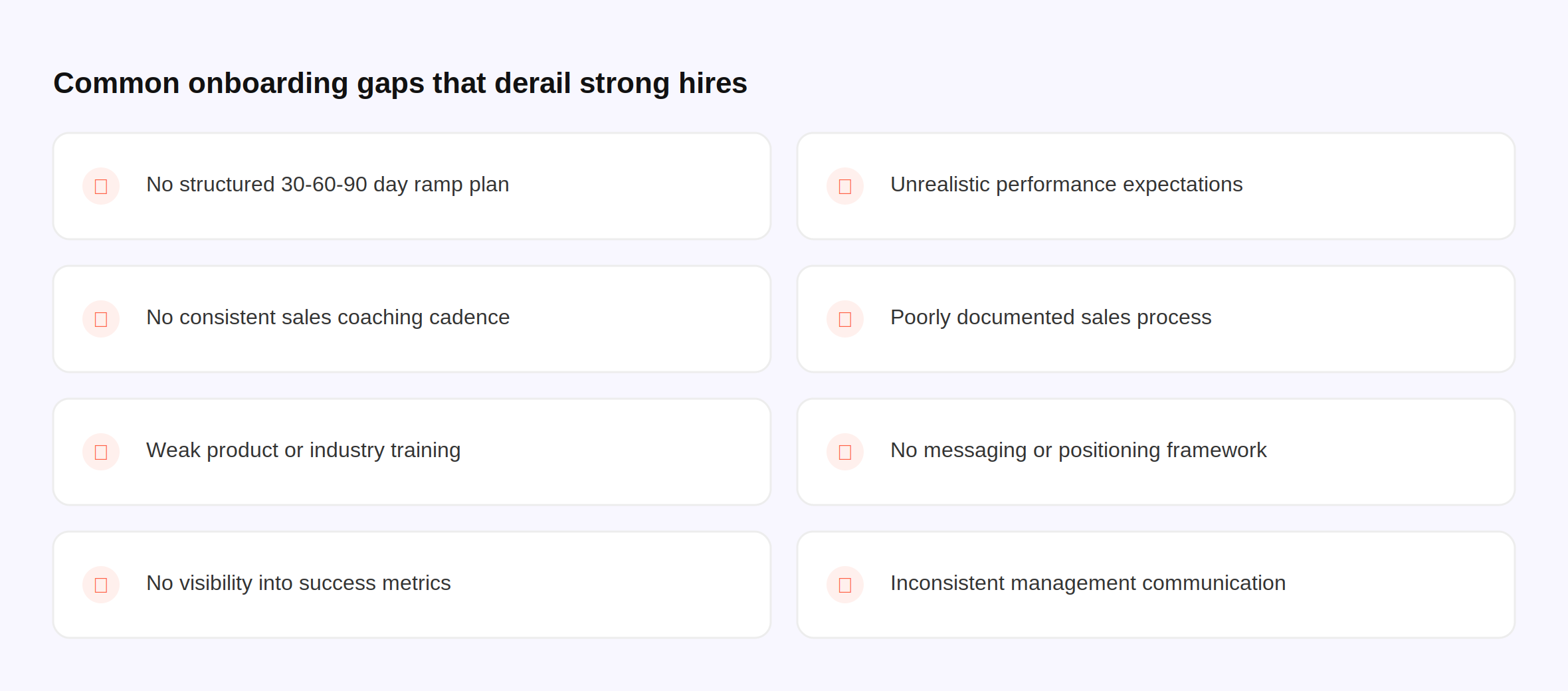
In too many organizations, onboarding amounts to: here is your CRM login, here is your quota, go sell. That is not onboarding. That is hope.
What strong sales onboarding actually looks like
The best onboarding programs create structure, accountability, and confidence early, before the pressure to produce fully kicks in.
A clear 30-60-90 day ramp plan
Effective sales onboarding defines staged progression, not just quota attainment. Expectations should evolve as the rep moves through the process, not stay flat from day one.
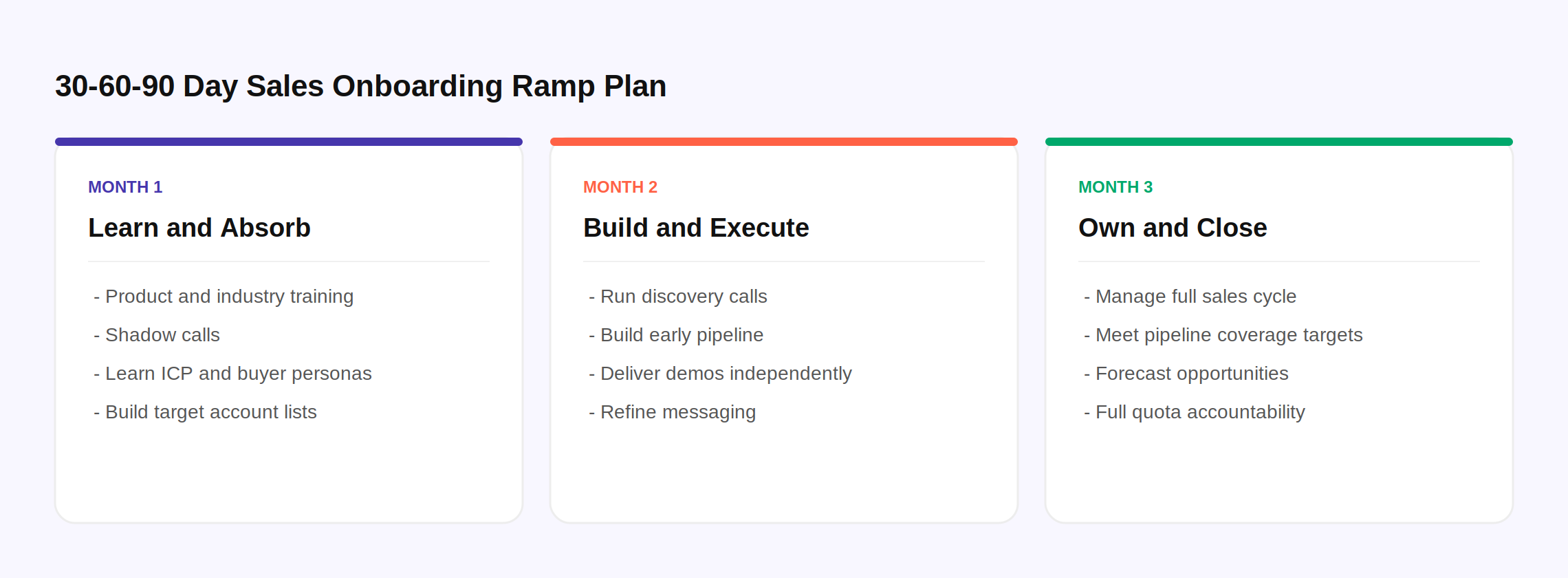
Early KPIs should build toward performance, not immediately measure it.
Product and industry training that goes deep
Surface-level product knowledge is not enough in competitive B2B SaaS sales environments. Reps need to understand buyer pain points, industry workflows, competitive positioning, and the financial impact your product delivers. Credibility matters early, especially where buyers can tell immediately whether a rep truly understands their world.
Consistent sales coaching and feedback loops
One of the fastest ways to accelerate sales rep ramp time is consistent, structured coaching. Weekly one-on-ones, pipeline reviews, call debriefs, and ongoing support on objection handling and messaging. Most importantly, it means identifying problems early, not waiting 90 days to decide a rep is not performing.

Sales process and playbook documentation
Even strong reps need clarity around how your sales process actually works — stage definitions, qualification standards, CRM expectations, demo structure, proposal workflows, and follow-up cadence. The more ambiguity that exists, the longer ramp takes and the more inconsistent early performance becomes.
Internal team alignment
Sales reps do not sell in isolation. They rely on SDRs, sales engineers, product teams, implementation, customer success, and leadership. New reps need to know who owns what, where to go for support, how handoffs work, and how deals move internally. Lack of clarity creates unnecessary friction during the most important stage of ramp.
The bottom line
The companies that ramp sales reps fastest, retain talent longest, and generate the greatest ROI from every sales hire share one thing in common: they understand that hiring great talent is only the beginning.
The onboarding process determines whether that talent actually reaches its full potential. Structure, enablement, coaching, accountability, and realistic expectations are not soft investments. They are the infrastructure that turns a good hire into a high-performing one.
If you are ready to build a more structured onboarding process, the HireDNA Sales Rep Onboarding Blueprint gives you a complete framework from 30-60-90 day ramp milestones and product training curricula to coaching cadences and realistic performance expectations. Everything you need to ramp new sales reps faster and more consistently, starting from day one.