
Not all sales leads are created equal. Some have a strong intent to buy, while others are essentially just window shopping. To ensure you pursue the right leads, you need a proven lead qualification framework that helps you separate the wheat from the chaff.
In this post, I'll discuss the science of lead qualification and walk you through a step-by-step process to quickly sort through leads and find the best of the best.
Create an Ideal Customer Profile
Before doing anything else, you'll need to articulate exactly who you're trying to reach with your sales and marketing. What does your ideal customer look like? What's their budget? What are their pain points?
These are just a few of the questions you'll need to find answers to. Upon finding these answers, this will guide the subsequent steps in the process so you'll not only know what types of leads to aggressively pursue, but also which ones to back off on.
One of the easiest ways to identify your ideal customer is to create an ideal customer profile (ICP). Here's a sample template to get you started.
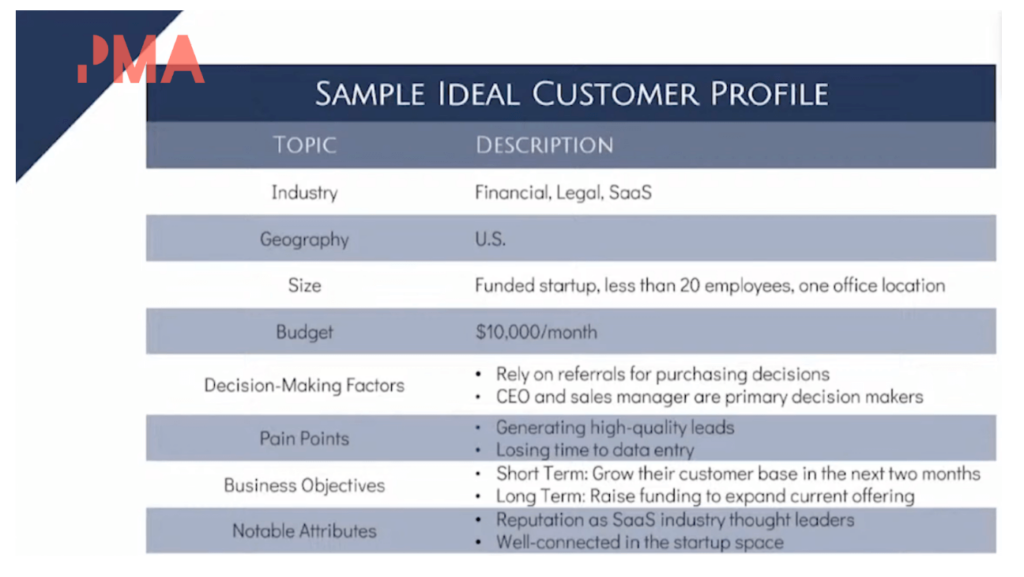
After your ICP is fleshed out, you're ready for the next step.
Use Lead Scoring To Assign a Numerical Value to Leads
Once you clearly understand who you're trying to reach, as well as who isn't a high-priority lead, I suggest using lead scoring. If you're unfamiliar, lead scoring is a type of software that analyzes leads based on critical criteria and assigns them a numerical value.
Say, for instance, a lead visited your pricing page or submitted a form. They would be given a certain amount of points. Or, if someone performed an action that would lower their chances of converting, like unsubscribing from your email, they would receive a point deduction.
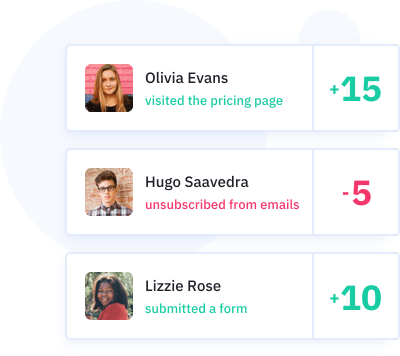
After a lead scoring software crunches all the numbers, each lead is given a quantifiable score.
In turn, you can objectively determine how qualified a lead is. For those who aren't qualified, you can nurture them until they are qualified or scrap them altogether if need be. And for those who are qualified, you can go even more granular to see which ones have the highest scores, so you'll know who to prioritize.
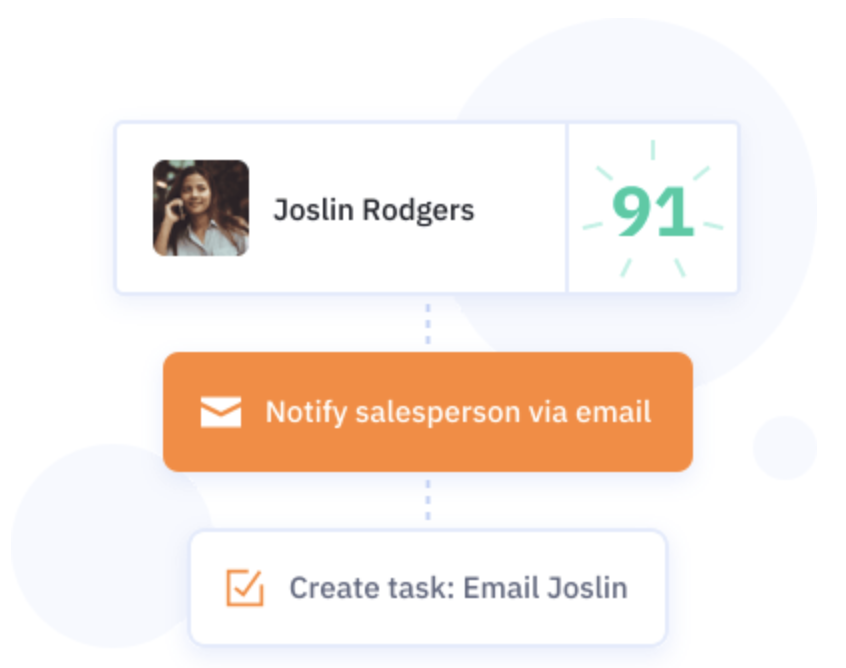
Say, for instance, one lead received a score of 85...
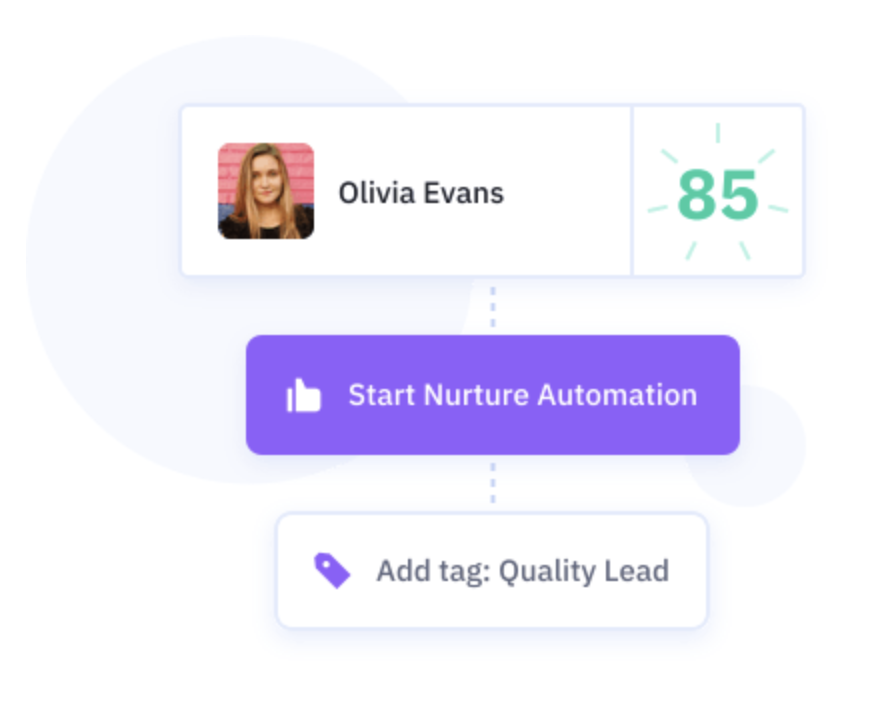
...and another lead received a 91.
You would want to make the one with a 91 a bigger priority than the one with an 85 because they've shown a stronger intent to buy. As long as this lead meets an adequate amount of ideal candidate profile criteria, they would be someone you would want to quickly pursue.
If you're wondering about lead scoring platforms, one of my favorites is Active Campaign.
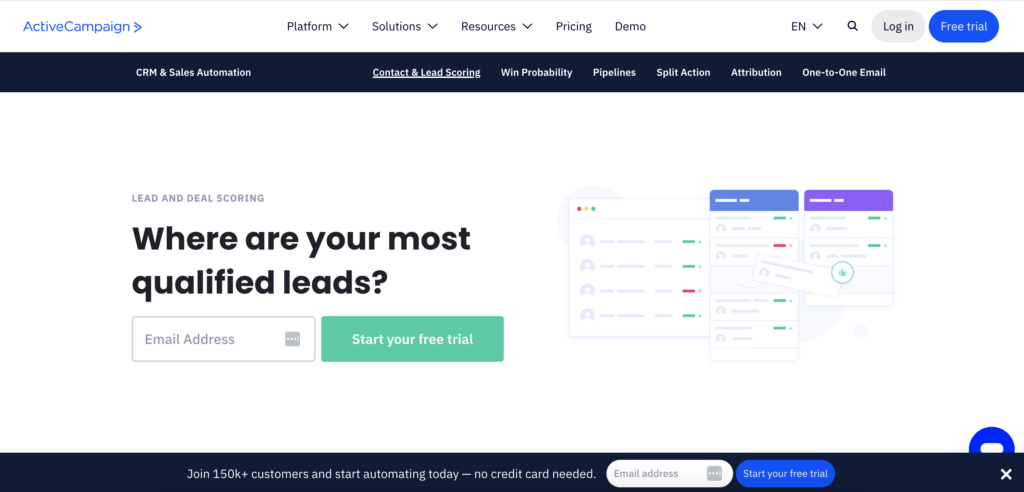
It's simple and intuitive and lets you score leads on a wide variety of actions, including the following.
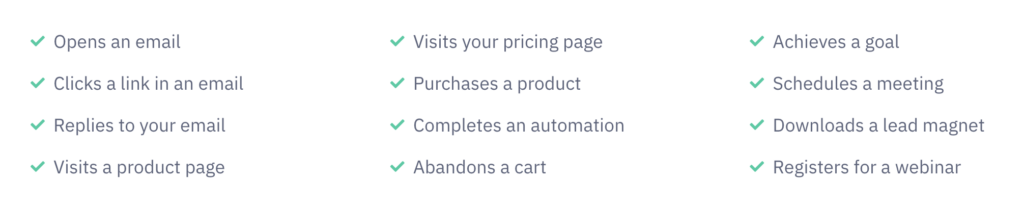
Besides that, it automatically notifies team members when you have a hot lead on your hands. And for those that reach a certain score but aren't scorching hot, Active Campaign will initiate nurturing to warm them up. This brings us to our next point.
Break Leads Down into MQLs and SQLs
We've touched on the importance of distinguishing between warm and hot leads. But let's dive a bit deeper.
One of the best ways to separate qualified leads further is by ranking each as either a:
-
Marketing qualified lead (MQL) — Someone who's in the awareness or interest stage of the sales funnel
-
Sales qualified lead (SQL) - Someone who's in the decision or action stage
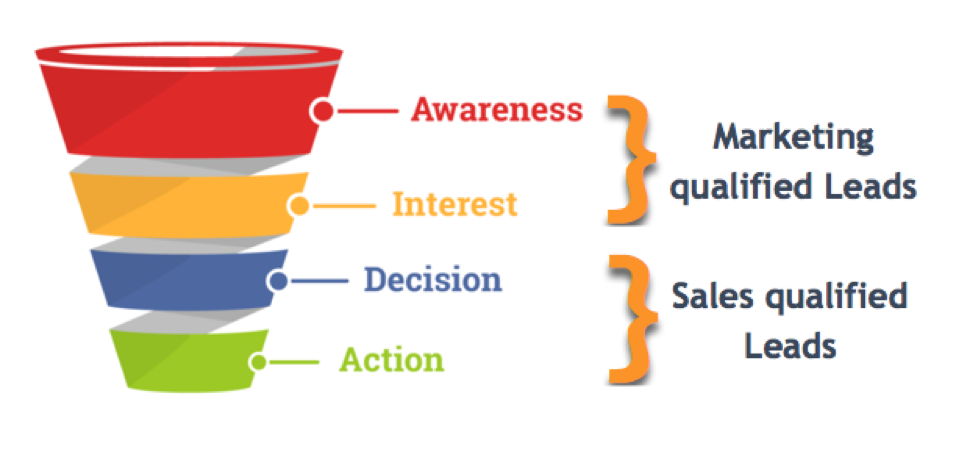
While this, admittedly, could be seen as an oversimplification, it's an effective way to determine who's sales-ready and who needs some more time. MQLs get sent to your marketing team, and SQLs get sent to your sales team.
That way, you're only focusing on the cream of the crop — something that's almost guaranteed to maximize your conversion rate. Needless to say, this can spill over to benefit you in several other areas, including better marketing ROI, more sales, more revenue, and so on.
And if you're dealing with a high volume of leads (which hopefully you are), breaking leads down into MQLs and SQLs can be huge for streamlining lead distribution.
Use Analytics and Feedback to Further Improve Your Process
While some level of intuition may be helpful in lead qualification, I find that objective data tends to have the biggest impact. After implementing the three steps mentioned above and giving it some time for data to accumulate, I suggest using a mix of analytics and human feedback to see what's working and what needs fine-tuning.
The simplest way to go about this is to look at your overall conversion rate. If it's higher than what you expected, the current system is working and probably doesn't need much tinkering. However, if it's underwhelming, you'll need to make some adjustments, which may include updating your ideal candidate profile or being more rigorous with who qualifies as an SQL rather than an MQL.
Also, getting direct feedback from your sales team can be extremely helpful. Because they're in the trenches, they can tell you firsthand if there are any hiccups in your lead qualification process that need to be addressed.
Getting Lead Qualification Down to a Science
Whatever industry you're in, the goal is the same. Find the leads who are the most likely to convert into customers and pursue them above lesser-qualified leads.
Doing this effectively boils down to three main steps — creating an ideal candidate profile, using lead scoring to give each lead a concrete value, and breaking leads down into MQLs and SQLs. That way, you can proceed with relative certainty that the leads you route to sales have a strong likelihood of buying.
And by making iterative improvements over time, you'll only get better and better.
To find top-tier salespeople who can close more of the leads you send their way, use HireDNA to build an all-star team.