
Hiring a sales recruiter is one of the most consequential decisions a founder or sales leader will make. The outcome directly impacts revenue, pipeline coverage, team morale, and leadership credibility.
Yet many companies still evaluate sales recruiting agencies using surface level criteria. Years in business. Brand logos. Resume volume.
That approach explains why sales hiring failure rates remain consistently high.
Industry research shows that 60 to 70 percent of sales hires fail within the first 18 months, and the true cost of a bad sales hire is typically 1.5 to 2 times annual compensation once lost pipeline, ramp time, and replacement costs are considered.
If you are evaluating a sales recruiting agency, here is what actually matters.
Industry Experience and Sales Context Expertise
Sales recruiting is not general recruiting.
A qualified sales recruiter understands how industry, buyer profile, deal size, and sales motion affect performance. Hiring an enterprise Account Executive is fundamentally different from hiring a transactional SMB seller, even when titles look identical.
What to look for
Demonstrated experience recruiting within your industry
Understanding of SaaS, B2B, enterprise, and midmarket sales models
Ability to assess relevance of experience beyond company names
Why it matters
Sales performance is contextual. Placing sellers into unfamiliar environments increases ramp time and turnover risk. This is one of the most common issues outlined in the mistakes SaaS founders make when hiring salespeople.
Sales Expertise Beyond Resume Matching
A strong sales recruiter evaluates candidates the same way a sales leader would.
That means understanding how candidates prospect, qualify, manage pipeline, and close deals. Not simply confirming they held a sales title at some point.
What to look for
Recruiters who understand full sales cycle execution
Ability to validate quota ownership and performance history
Comfort discussing real deal execution rather than surface-level selling language
Why it matters
Resume screening alone has little correlation with sales performance. Recruiters without sales expertise push hiring risk downstream, creating more interviews but weaker outcomes.
Data Driven Evaluation and Structured Screening
Gut feel does not scale and it does not reduce hiring risk.
High performing sales recruiting agencies rely on structured evaluation frameworks that allow candidates to be assessed consistently and compared objectively.
What to look for
Defined screening criteria applied across all candidates
Structured intake and role calibration upfront
Clear documentation explaining why candidates are shortlisted
Why it matters
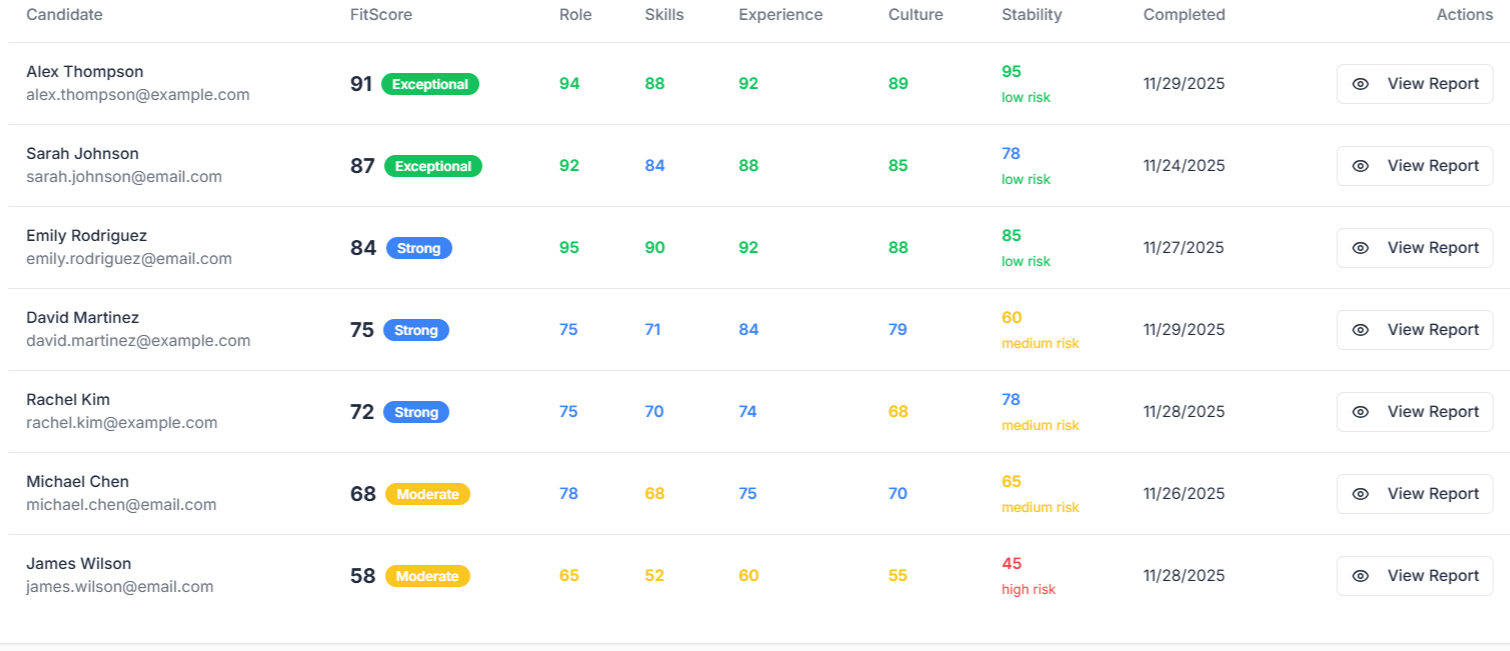
Structured evaluation improves hiring accuracy and consistency. This approach is reflected in the FitScore matching methodology, which evaluates role fit, experience alignment, and sales context before candidates reach the interview stage.
Skills-Based Assessment Aligned to Sales Performance
Sales is an execution role. Skills matter more than pedigree.
Recruiters who rely solely on resumes and conversational interviews miss critical indicators that directly affect quota attainment.
What to look for
Skills-based assessment designed specifically for sales roles
Evaluation of prospecting, discovery, objection handling, and closing
Benchmarks aligned to the role rather than generic personality testing
Why it matters
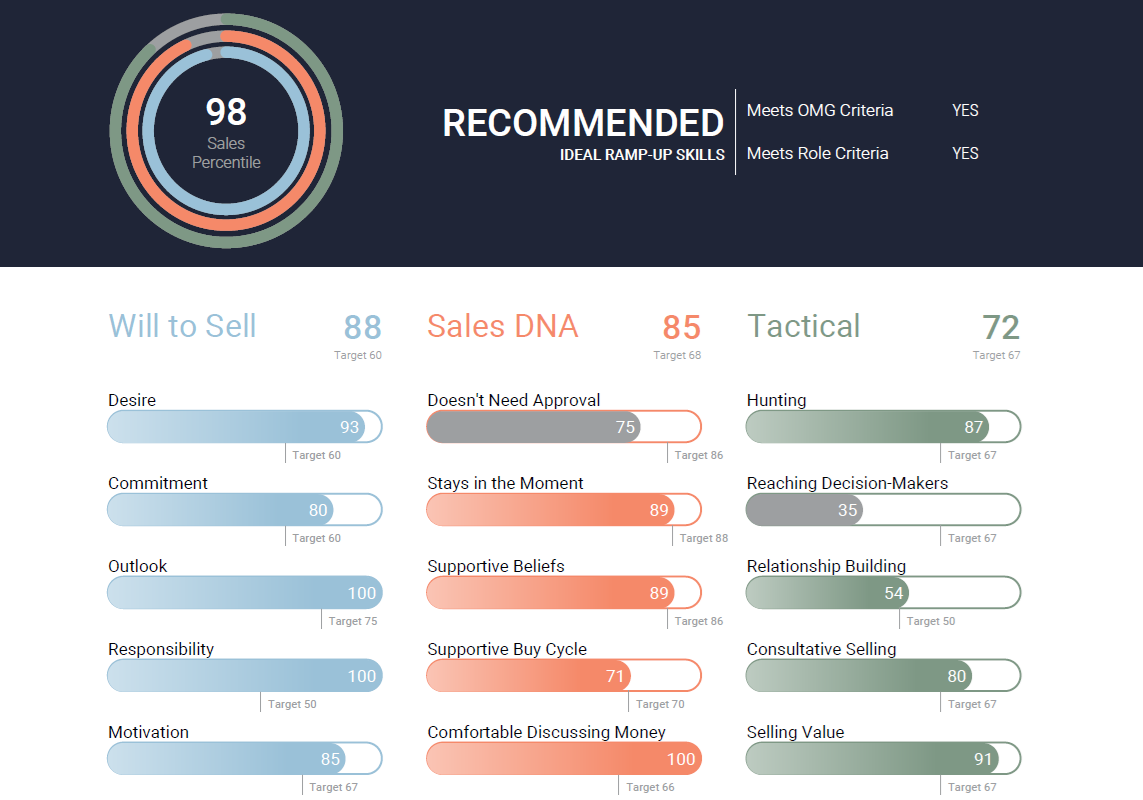
Skills-based hiring improves both performance and retention in revenue roles. This is why integrating a sales skills aptitude assessment into the hiring process materially improves outcomes.
Ability to Vet Against Sales Specific Criteria
Strong sales recruiters evaluate candidates using the same criteria sales leaders care about.
What to look for
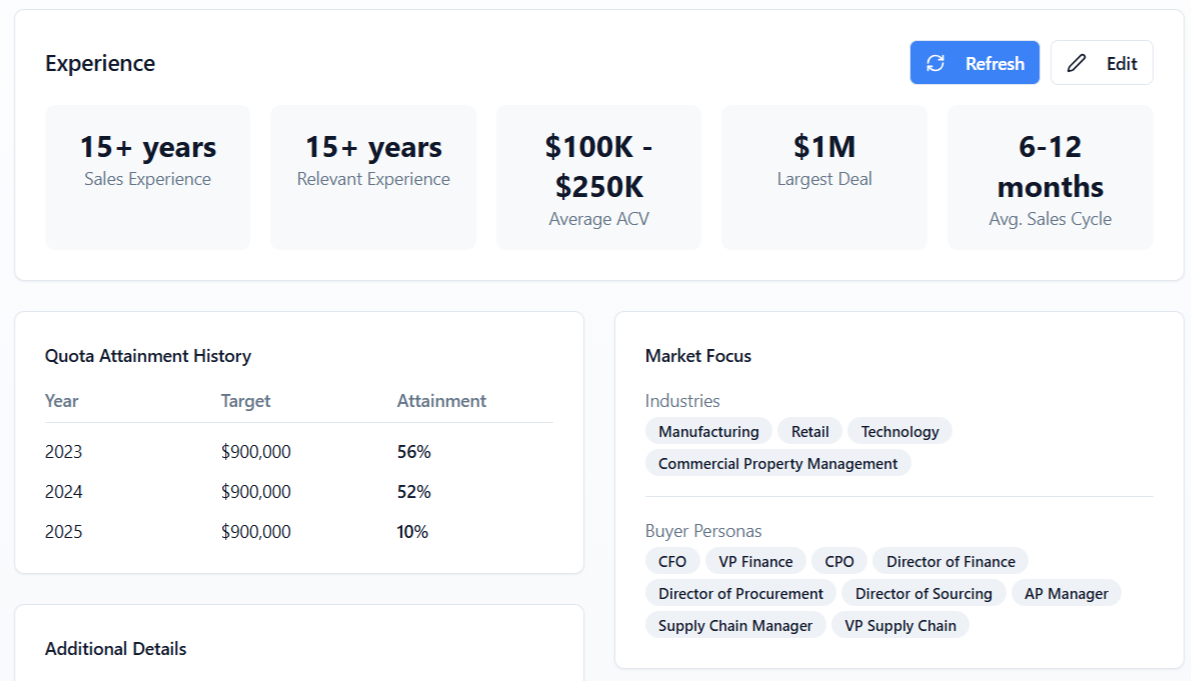
Verified quota history and attainment patterns
Relevant sales cycle length and deal size experience
Alignment with target buyers and markets
Compensation expectations that match role economics
Why it matters
Sales outcomes leave measurable patterns. Recruiters who avoid specifics increase interview volume while reducing hiring accuracy. Well-structured candidate profiles make these details visible and comparable.
Proactive Talent Sourcing Not Resume Forwarding
The best sales candidates are rarely active job seekers.
Top recruiting agencies invest in proactive sourcing and relationship-driven outreach to engage currently performing sales talent.
What to look for
Outbound sourcing tailored to your role and market
Access to passive candidates not applying to job boards
Emphasis on quality over resume volume
Why it matters
More than 70 percent of the workforce is considered passive. Relying on inbound applicants alone dramatically limits candidate quality and consistency.
A Defined Hiring Framework With Clear Ownership
Sales recruiting should operate as a system, not a collection of disconnected activities.
What to look for
Clear stages from intake through hire
Defined ownership of sourcing, screening, coordination, and communication
Visibility into pipeline progress and candidate status
Why it matters
Hiring velocity and candidate experience both suffer without structure. A clearly defined sales hiring framework reduces friction and improves decision-making across stakeholders.
Focus on Performance and Retention Not Just Placement
The goal is not to hire faster. The goal is to hire people who perform and stay.
What to look for
Attention to job history patterns and retention risk
Willingness to define success beyond start date
Emphasis on long term performance outcomes
Why it matters
Replacing a failed sales hire compounds cost and disruption. The sales hiring ROI calculator makes the financial impact explicit before a hiring decision is made.
Final Takeaway
Hiring a sales recruiter is a risk management decision.
The right partner brings industry expertise, sales fluency, structured evaluation, skills based assessment, proactive sourcing, and a repeatable hiring framework focused on long term results.
Anything less transfers risk back onto your team.
Before making your next hiring decision, calculate the true cost of a bad sales hire to understand the financial risk involved.